I woke on Sunday in a strange bed, the scent of jasmine heavy in the room, the sound of birds and jets too loud to sleep through. I was in London at an Airbnb down the street from my son’s newish flat, having a weekend immersing myself in his life there, going to the car boot sale with him and his longtime girlfriend, hoping I’d get the front seat on the top of London’s double decker busses, watching my son and his friends play ping pong in a park as they talked about their lives, their jobs, which one was going to a Vipassana retreat next.
There are tears in my eyes just thinking about the weekend from here at my desk at home in France, my dog keeping a careful eye out my office window in case any of our cats have the audacity to come into view. I was swept away by my love for my son, his partner, their friends. I was overcome by the beauty of the spring, the heady scent of lilacs, the goslings awkwardly following their hissing mother, the luscious promise heralded by so much green.
This is a post about AI dread.
I am no stranger to dread. The first time I had cancer, I lived in dread so deep I didn’t even write about it; the word “dread” hardly appears in the blog I kept, even though it was the biggest emotion I experienced. The second time I had cancer, I wrote about that dread and could even see what it was doing to me, what it had done to me the first time. I could see that dread brings a terrible, fictional future into the present and ruins this moment. I sat in the chemotherapy chairs with a full head of hair and worried about being bald. I took medicine to change the way my body processed estrogen and worried I would become a stranger to myself. I looked into the faces of my children and worried I wouldn’t see them graduate from high school. Dread was my own kryptonite, making me weak in just the moment I needed to be strong. And it was all very very local. All of those experiences were in my own little play on my own tiny stage. Whether or not I was curled into a dread ball in bed was immaterial to basically everyone in the world.
And now our stage is enormous, and it is highly material whether each of us is curled into a dread ball as we think about the world right now, as we think about what AI brings to our unknowable future. I have been in hundreds of conversations lately about AI with my clients, with my colleagues, on a webinar, in a top team presentation. Every conversation—even if it begins by looking at the amazing promise of AI—involves some manner of existential dread. AI is definitely changing what it means to work and think, how armies go about killing people; AI is probably changing what it means to derive meaning at work; AI is possibly changing our economies, our climate; AI will perhaps end life as we know it. This is not just me climbing into the radiography machine and hoping that the beams (rays?) kill the cancer and not my heart cells. This is all of us in the uncertainty machine together.
And here’s the weird bit I still don’t know how to write about, am still puzzling out: Somehow I’m experiencing this moment of quite consequential existential dread for all of us in a vastly different way than I experienced my own personal dread. Somehow for me hope is closer at hand now. The possibility of my own mortality when I was faced with my cancer diagnoses made me horribly anxious and sad and unsettled. And it also made me more alive than I have ever been, more committed to seeing the beauty of this world and fully taking it in, avoiding as much of the petty bullshit as I possibly could, knowing that a far-too-big percentage of my pre-cancer life had been consumed by petty bullshit. That change had surprising delights along with the horrors, and it could be terribly terribly lonely because it seemed impossible for others to understand what it felt like to be in that moment.
Maybe here’s the difference. We are all in this boat together right now. It’s big enough for all of us. I feel myself in good company with the world here.
But maybe that’s not how it feels to everyone.
My friend and colleague Leanne Holdsworth and I held a webinar recently about Leadership in a Time of AI. We talked about how the act of leadership right now—more than ever—requires us to settle our own nervous systems and help co-regulate the nervous systems of others. This isn’t a new idea (Carolyn Coughlin and I wrote a book about it a few years ago), but it is a more necessary idea than it has been. In our webinar, we asked our participants what practices they engage in that settle their nervous systems. I’ve asked that question of thousands of leaders in the last few years. Generally, the top three answers are something like: Moving (swimming/ running/ yoga), space (getting into nature, getting out of the office), and connection (going out with friends, talking with my partner). The order varies. This time we asked the 125 participants who were with us, and they said things like moving, breath, nature, silence. What was there wasn’t surprising. What was missing was shocking. Almost no one talked about connection, about talking, laughing, being with other humans. I’ve never had a response like that before.
Maybe that was a fluke. But maybe it’s a weak signal of something I think we can tackle immediately. The story I’m telling myself about this shift is that everyone is curled up in a dreadball in their own beds and they feel alone in it. They take their aloneness and walk in nature or sit in silent meditation. I know that kind of lonely dread.
And yet right now, I am in the overwhelm that has brought me dread in the past, and yet it feels so different. Everything is too much these days. I serve clients who are trying to literally reimagine work, who are trying to take their dread for the future and turn it into something like profound creativity in the present. I’m leading a firm going through a significant organizational change. I live in an intentional community in France making unalterable decisions about who should join us next. I have two adult children swimming in, swirling in, and sometimes surfing in the tempest of now. I am also afraid of the future, also can imagine this as the last good time for humans on earth. But somehow, most of the time I don’t feel dread.
I feel alive.
I feel caffeinated (even when I’m not) because it is so imperative that we work together to invent new ways of being right now, new ways of relating, of acting, of learning. Of loving.
I guess I’m discovering even as I write that the thing that is changing my experience of this dread is that I feel us all connected in it. This is not just my issue or yours. This challenge is everyone’s. And more than that, we actually require each other to get through this. I have absolutely no idea what answer we will find. I have only the deep knowing that our human connection and creativity and imagination is a part of crafting the path to a better future.
I am feeling it imperative for us to find each other right now. Imperative for us to lean into connection, to reinvent what it means to be humans at work together, at home together, on the double decker bus together. Yes, the gratitude of every moment that isn’t apocalyptic is a delightful experience. But more importantly, we need to be making intentional changes in the way we are soothing ourselves in this moment of planetary distress. Breathe together. Walk in nature together. Sit around a big table and have dinner together. Also: wrestle together about our vastly different perspectives on what to do next. Feel frustrated and lost and afraid. But together, pushing forward on being together even through those different perspectives, even though we are lost and afraid.
I am not talking about finding your small tribe, circling your wagons, and trying to get away from the world. (Which might feel odd from someone who literally bought a big house with my friends in the French countryside.) I’m talking about reaching across difficulty and difference to forge a new path. Arguing about immigration and war and AI together. Staring into our different fears, sharing our different longings. And then making a meal and laughing at the antics of a squirrel in a tree together.
Let’s reinvent together what it means to be in human circles of connection. Let’s experiment with new ways to co-regulate each other in wider and wider circles. Not just because it feels good (although that is delightful) but because it’s part of the answer to all of the challenges we face. I’m experimenting with relating and co-creating in all kinds of new ways that I’d like to explore together with you. I’d love to hear about what you’re experimenting with. And together we can uncurl from the dreadballs and join one another to invent a better world.
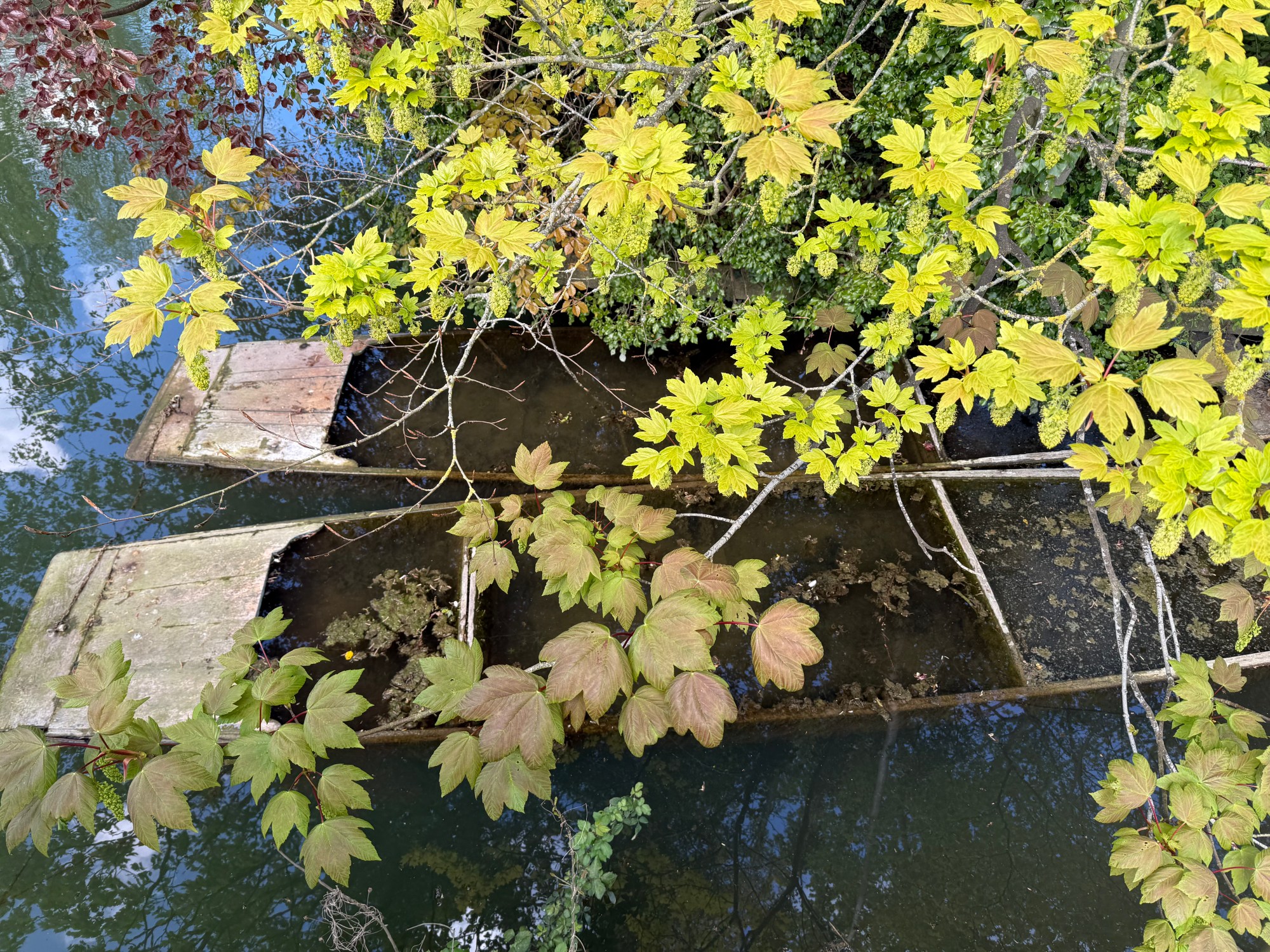
PS I took this photo in Cambridge (England) on a walk during the meeting of all of us at Cultivating Leadership. Beauty and ruin together. Reminds me of now.


